
Highlights
We are moving towards a time when mobile applications will not only respond but will also predict. Hyper-personalization, enabled by agentic AI, makes user interactions in a way that is not only intelligent but also emotionally engaging. The agentic systems, to begin with, can understand the users better by providing contextual recommendations and adaptive workflows. This blog explains how agentic AI is the conductor of these personalized experiences, talks about the frameworks such as Google ADK and LangChain, and the reasons behind this transformation being a major phenomenon resounding across different sectors
“Personalization isn’t just a feature – it’s ownership. Take it away, and you risk losing user trust.” This line has stuck with me since my first days as a mobile application developer. I worked on a social chat app where users could personalize their chat backdrops. When management proposed removing this feature, a senior went south and reminded us that personalization creates connection, trust, and engagement. Today, personalization is no longer restricted to visual options or small settings. For example, mobile apps are now integrated with the power of agentic AI. Meaning, they can anticipate user demands, act proactively, and provide experiences that are intelligent, contextual, and human. This is the heart of hyper-personalization.
This is a paradigm shift from static recommendations to a continuous, adaptive, and highly personalized engagement. And to make every moment of your end user experience count, you need to surf with the wave of agentic change.
Reading this blog will help you understand why hyper-personalization is more than important now, how agentic AI can transform mobile apps, and the multi-dimensional impact it creates for every stakeholder in the mobile app ecosystem, and more.
So, let’s get started!
Why does Hyper-Personalization Matter to Build Advanced Mobile Apps?
Most mobile apps today use reactive personalization. That is, the program monitors clicks, purchases, and surfing habits and reacts with general recommendations. Although functional, this strategy has limitations.
The reason? Well, modern users are becoming accustomed to digital experiences that are intuitive, seamless, and personalized to them. And static personalization cannot fulfil this expectation.
This is exactly where hyper-personalization reverses this model. Rather than responding, it anticipates.
Consider a purchasing app that detects a user exploring winter jackets and directs them to options that fit their style, size, and even local availability – all before they search for it. These interactions are facilitated by intelligent agents that reason across multiple data points, continuously learn from behaviour, and adapt recommendations.
So, the effect is quantifiable. According to a recent report, businesses that use agentic hyper-personalization have seen increases in customer lifetime value of 35-50%, session durations of 40-60%, and conversion rates of 35-50%. More significantly, users no longer feel like passive participants. They experience guidance, understanding, and value.
This is the difference between hyper-personalization and traditional personalization, and it explains why mobile products are becoming increasingly competitive.
To further simplify, here’s a short table that you can refer to learn about the difference:

Fig: Traditional Personalization Vs. Hyper-Personalization
Now, with AI agents handling hyper-personalization, businesses can focus on what truly matters—strategic growth and innovation.
Next, you’ll understand why mobile apps are perfect for agentic AI to drive hyper-personalization.
What Makes Mobile Apps the Best Fit for Agentic AI?
First, understand this – contextual signals are abundant on mobile devices. A comprehensive image of the user’s condition and surroundings is produced via sensors, location information, session histories, real-time engagement measures, and behavioral patterns.
As it can decipher these signals in real time, predict user demands, and take proactive measures, agentic AI flourishes in this ecosystem.
Take a user who is commuting and perusing a shopping app, for instance. An agent may apply a timely promotional offer, highlight items that are likely to be of interest to the user, or prioritize items based on their past behaviour, device context, and inferred purpose. The application powered by agentic AI, creates a smooth, anticipatory experience that seems intelligent and human by adjusting to the user’s surroundings and preferences.
Beyond e-commerce, this approach is revolutionizing other industries, such as:
- Productivity apps that can rearrange your schedule according to energy levels and meeting results
- Healthcare apps that can identify stress patterns and recommend timely wellness interventions
- Fintech apps that anticipate cash flow problems and proactively suggest savings adjustments
These are just a few examples—what unites them is that context-aware AI takes action proactively rather than waiting.
To truly understand the power of hyper-personalization, next, let’s examine its effects from every angle.
How Does Agentic AI-Driven Hyper-Personalization Impact Stakeholders?
Agentic AI-driven hyper-personalization affects every stakeholder involved in the mobile app ecosystem — and its value is best understood through multiple perspectives.
Let’s break it down:
- From the User’s Perspective
Interactions become intuitive and seamless. The mobile application appears to “understand” users and eliminates the need for them to wait for recommendations. For instance, a regular customer might get product recommendations based on trends, local availability, past purchases, and even an inferred mood based on session behavior. The timely delivery of notifications, offers, and follow-ups fosters trust and a sense of attentiveness.This happens because the app is now a personalized companion on their digital journey rather than just a tool, making them feel more involved. This fosters user loyalty that’s difficult for competitors to break, as personalization respects privacy and delivers genuine value rather than manipulation.
- From the Product and Business Perspective
Hyper-personalization yields measurable outcomes. Users who receive pertinent recommendations at the right time see an improvement in engagement metrics. When content and offers match actual user intent, conversion rates are likely to rise. As the agentic system learns and adapts over time, it also becomes less dependent on static logic and human A/B testing.A product can be strategically differentiated by using this flexible approach, putting it ahead of competitors who continue to use conventional personalization methods. This may lead to reduced attrition, increased average order values, and enhanced customer satisfaction ratings – all having a direct influence on revenue, making the business case strong.
- From the Development and Architect Perspective
Designing systems that can coordinate several intelligent agents while maintaining scalability, consistency, and dependability is a problem. Because each agent must function independently while integrating seamlessly with workflows, creating a modular, agent-driven architecture demands planning.To guarantee trust and compliance, engineers must strike a balance between the adaptability of continuous learning loops and strong barriers. When compared to traditional architectures, the technological complexity rises dramatically.
Coordinating asynchronous agent communications, managing distributed reasoning systems, maintaining state consistency across parallel workflows, and putting backup mechanisms in place in case agents make inaccurate predictions are all tasks you’re performing. When done correctly, this results in a live system that changes with its users and remains relevant over time. As the system’s value increases with use, the architectural investment pays for itself.

Speed meets precision in app development. Learn how our mobility engineering team transformed an idea into a 60% faster launch for a customer.
Onwards to know how AI agents work to power mobile apps with hyper-personalization.
How Can AI Agents Work Together to Deliver Hyper-Personalization in Mobile Apps?
To illustrate hyper-personalization in action, consider a shopping app where agentic AI orchestrates every step from product discovery to post-purchase engagement. The system is designed as a cohesive ecosystem of intelligent agents, each specialized yet seamlessly integrated.
Here’s how the system unfolds:
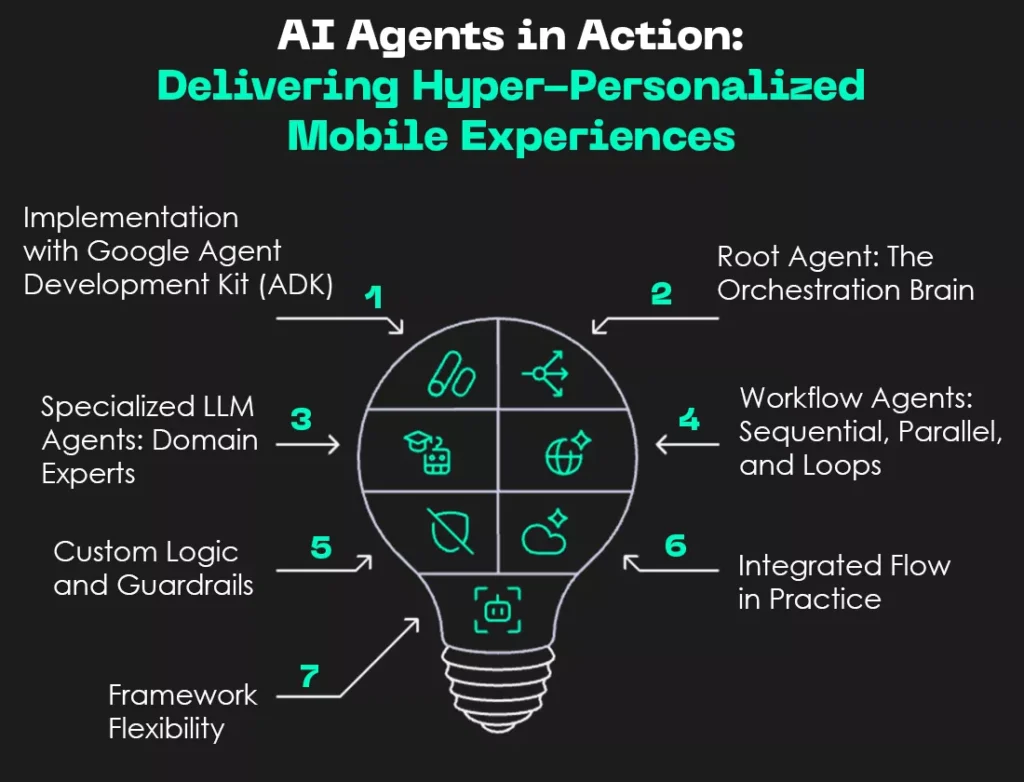
Fig: AI Agents in Action: Delivering Hyper-Personalized Mobile Experiences
1. Implementation with Google Agent Development Kit (ADK)
Google’s Agent Development Kit (ADK) provides native support for sequential agents, parallel agents, and workflow orchestration. This makes it an excellent foundation for this architecture. Alternatively, frameworks like LangChain, LangGraph, or CrewAI can achieve similar patterns with slightly different API structures, but the design principles remain consistent.
2. Root Agent: The Orchestration Brain
The Root Agent sits at the center, orchestrating the entire system. Here’s what it does:
- Maintains full session context for every user (such as browsing history, preferences, and inferred intent) in the distributed cache
- Routes complex tasks to appropriate specialized agents based on intent classification
- Aggregates results from multiple agents, resolving conflicts when agents provide contradictory recommendations
- Logs interactions into a vector database for RAG retrieval and continuous learning
This flow shows how user interactions are managed and processed by the Root Agent:
User Opens App → Root Agent (Context) → Intent Classification
↓
Route to Specialized Agents → Aggregate Response
↓
Update Knowledge Store
Using Google ADK, the Root Agent is implemented as a workflow orchestrator. It manages agent lifecycle and coordinates communication between specialized agents through structured message passing.
3. Specialized LLM Agents: Domain Experts
Next, the Root Agent delegates tasks to specialized agents, such as:
- Styling Agent: Interprets style patterns using RAG to deliver curated recommendations. Highlights complementary products and adapts descriptions to user preferences. Built on fine-tuned LLMs with fashion domain knowledge.
- Stock Check Agent: Ensures recommended items are actionable by querying inventory APIs in real-time. Triggers fallback suggestions for out-of-stock items, preventing abandoned carts.
- Discount Offer Agent: Dynamically calculates promotions based on engagement and cart context. Uses reinforcement learning to optimize discount strategies while protecting margins.
In Google ADK, these are implemented as individual agent instances, each with specific tool access and reasoning capabilities. The framework handles inter-agent communication and state management automatically.
4. Workflow Agents: Sequential, Parallel, and Loops
These agents define the order, concurrency, and repetition of actions within the system.
i. Sequential Workflow (Google ADK Sequential Agent pattern):
This sequential workflow executes tasks step by step to deliver a smooth, hyper-personalized experience.
The code snippet shows how the styling_agent, stock_check_agent, and discount_agent are orchestrated in order using Google ADK’s Sequential Agent pattern:
# Pseudocode illustration
recommendation_workflow = SequentialAgent([
styling_agent, # Generate recommendations
stock_check_agent, # Validate availability
discount_agent # Apply personalized offers
])
The pipeline orchestrates style suggestion → stock verification → discount application, with dynamic branching based on real-time signals.
ii. Parallel Workflow (Google ADK Parallel Agent pattern):
This handles post-purchase operations simultaneously with failure detection and retries. This code snippet defines a parallel workflow where multiple agents run simultaneously:
# Pseudocode illustration
order_workflow = ParallelAgent([
inventory_update_agent,

email_notification_agent,
push_notification_agent,

analytics_logging_agent
])
iii. Persistent Loop (Google ADK Loop Agent pattern):
This is a loop component that sends personalized engagement messages until the user provides feedback, adjusting frequency and tone based on prior interactions. Here’s the code snippet for your reference:
# Pseudocode illustration
review_loop = LoopAgent(
review_followup_agent,
condition=until_user_responds,
max_iterations=5
)
5. Custom Logic and Guardrails
A policy layer ensures agents operate within boundaries. These layers can be implemented in our current scenario:
- Discount Agent cannot exceed margin thresholds
- Styling Agent should avoid unavailable items
- All agents must respect privacy preferences and data access policies
- Rate limiting should prevent agent overactivity
So, Google ADK supports these through policy decorators and constraint validators that wrap agent actions.
6. Integrated Flow in Practice
Here’s how the entire workflow looks – let’s say when a user browses for jackets:
- Root Agent interprets intent and retrieves context
- Styling Agent recommends items (using sequential workflow)
- Stock Check Agent validates availability
- Discount Offer Agent calculates personalized offers
- Order Processing Workflow triggers (using parallel workflow)
- Review Follow-up Loop nurtures engagement (using loop workflow)
This means that every interaction feeds back into the Root Agent, enabling continuous learning. The system gets smarter with each session, refining the understanding of individual preferences.
7. Framework Flexibility
While Google ADK provides excellent native support for these patterns, the same architecture works with alternative frameworks like:
- LangChain/LangGraph: Uses chains for sequential, parallel execution nodes, and cyclic graphs for loops
- AutoGen: Leverages conversational agent patterns with group chat orchestration
The core principle remains the same: specialized agents working in coordination through a central orchestrator, regardless of the framework used.
Quick watch: How to Use LangChain for Agentic AI Applications
Before we wrap up, I’d like to highlight a few considerations so you can make informed decisions when building hyper-personalization.
What are the Key Challenges and Considerations in Implementing Agentic AI for Hyper-personalization?
Here are some of the considerations:
- Data Privacy and Security: Use on-device processing where possible (Core ML, TensorFlow Lite), encrypt data in transit, implement differential privacy for shared learning.
- Workflow Orchestration Complexity: Implement robust orchestration with state machines, dead letter queues for failed tasks, and comprehensive observability.
- Performance and Scalability: Use edge computing for latency-sensitive operations, aggressive caching, and computational budgets to prevent runaway processing.
- Ethical Boundaries: Implement regular bias audits, explainability layers articulating recommendations, and user controls to adjust personalization intensity.
- Continuous Adaptation: Build real-time analytics pipelines, implement A/B testing frameworks for agent strategies, and automate model retraining workflows.
- Cost of Development with Agentic AI: Adopt agentic AI to reduce long-term personalization costs by replacing manual rules and segmentation with self-learning systems — enabling faster iterations, leaner teams, and higher ROI through better engagement, all without proportional increases in engineering overhead.
Onwards to know what lies next!
What Does the Future of Mobile Apps Look Like in the Agentic Era?
We are moving from apps that react to apps that act. Agentic AI enables apps to anticipate user needs, orchestrate intelligent workflows, and provide experiences that feel human and dynamic.
Future apps will be partners in the user journey, continuously learning and adapting proactively. They’ll be built around ecosystems of intelligent agents, replacing hard-coded rules with reasoning systems that understand context and intent.
They’ll deliver experiences perceived as intuitive, personal, and valuable, creating emotional connections beyond functional utility. Thus, they will make businesses more relatable, customer-centric, and capable of fostering lasting loyalty.
This means hyper-personalization is no longer optional – it’s a critical differentiator in mobile-first experiences. By combining agentic AI, modular agent architectures, and orchestrated workflows using frameworks like Google ADK, LangChain, or AutoGen, mobile apps can deliver experiences that feel alive and uniquely tailored.
The question for your organization: will you lead this transformation, or follow it?
Here’s what I’d suggest: make the right move and partner with us to lead the charge in today’s evolving tech landscape. Contact us at Nitor Infotech, an Ascendion company, where we’re ready to build your next-generation mobile app — powered by agentic intelligence.