
Highlights
The blog frames LLM training for 2026: enterprises rarely build foundation models from scratch anymore, so the focus shifts to customizing, evaluating, deploying, and governing them. It explains why training from scratch is usually not worth it, then walks through choosing between Build, Fine-Tune, and RAG. It covers core fundamentals (pre-training, fine-tuning, tokenization) and Parameter-Efficient Fine-Tuning methods like LoRA and QLoRA, plus newer priorities — synthetic data, evaluation and hallucination reduction, LLMOps monitoring, training LLMs for autonomous agents, and enterprise security/governance practices. It closes by positioning itself as a pillar resource linking to Nitor’s related AI and LLM content.
In recent years, the field of NLP has undergone a remarkable transformation, driven by rapid progress in deep learning and artificial intelligence. Large Language Models (LLMs) are engineered to understand, analyze, and generate text in a way that closely emulates human communication — and they’ve moved research labs into the core of enterprise software.
But here’s what’s changed: almost no enterprise trains a foundation model from scratch anymore. In 2026, the real work — and the real competitive advantage — lies in how organizations customize, evaluate, deploy, and govern LLMs for production business use.
What is LLM Training?
LLM training is the process of teaching a large language model to understand and generate text, done in two main stages: pre-training, where the model learns language patterns from massive unlabeled text datasets, and fine-tuning, where it’s further trained on domain-specific data to specialize for a particular task. In 2026, most enterprises skip full pre-training and instead customize pre-trained foundation models through fine-tuning or RAG.
Why Enterprises Don’t Train Foundation Models From Scratch
Training a foundation model from the ground up sounds impressive in a boardroom pitch, but the economics rarely make sense outside of hyperscalers and AI-native labs:
- Compute cost: Pre-training a competitive model requires thousands of GPUs running for weeks or months — tens of millions of dollars.
- Data at scale: You need trillions of tokens of clean, deduplicated, well-filtered text, plus the infrastructure to manage it.
- Specialized talent: Distributed training and large-cluster orchestration require systems expertise most enterprises don’t need in-house.
- Opportunity cost: By the time a custom-trained model is ready, general-purpose foundation models have often already caught up.
For nearly every enterprise, the smarter path is to start with a strong pre-trained foundation model and adapt it — through prompting, retrieval, or fine-tuning — to your domain and workflows. That’s where the real ROI lives: not in building the brain, but in shaping how it thinks about your business. Which raises the next question: which adaptation strategy is right for your use case?
Build vs. Fine-Tune vs. RAG: Choosing the Right LLM Strategy
Once training from scratch is off the table, the decision comes down to three practical paths:
- Build — training or heavily pre-training from scratch. Rarely justified outside hyperscale players.
- Fine-tune — adapting a pre-trained model’s weights on domain data so it internalizes tone, reasoning, and specialized knowledge.
- RAG — keeping weights untouched and retrieving relevant, current information at inference time.
Fine-tuning suits cases where a model must consistently reason and “speak” like a domain expert. RAG is often faster and more practical when knowledge changes frequently and answers need to stay current and traceable — a support bot reflecting a same-day policy change, for instance. Most production systems ultimately combine both: fine-tuning for domain reasoning and style, RAG for real-time accuracy.
We break this decision down in detail — with cost and latency benchmarks and a hybrid framework — in Build vs. Fine-Tune vs. RAG: Choosing the Right LLM Strategy.
The Building Blocks: Pre-Training and Fine-Tuning, Refreshed
- Pre-training
Pre-training is the foundation-laying stage. The model is exposed to vast amounts of unlabeled text and trained on unsupervised objectives like predicting the next word in a sequence. This teaches grammar, syntax, semantics, and the statistical relationships between words — the general-purpose understanding every downstream task builds on. Foundation-model providers handle this stage; enterprises consume its output rather than repeat it. - Fine-tuning
Fine-tuning takes that pre-trained model and further trains it on a smaller, task- or domain-specific dataset, adapting its parameters to your terminology, tone, and reasoning patterns. This is where enterprise LLM work actually happens, and it’s where the rest of this blog focuses.
Tokenization: How Models Read Your Data
Tokenization — breaking text into units a model can process — still matters, especially when fine-tuning on domain-specific vocabulary such as medical terms, legal language, or product SKUs:
- Word-based tokenization treats each word as a token — simple, but vocabulary size explodes for large or specialized vocabularies.
- Subword-based tokenization (Byte Pair Encoding, SentencePiece) splits words into frequency-based units, the standard for most modern LLMs.
- Character-based tokenization handles any unseen word, at the cost of longer sequences and higher compute.
If your domain has heavy jargon or non-English content, how your base model tokenizes that vocabulary directly affects fine-tuning efficiency and inference cost — worth checking before committing to a model.
Parameter-Efficient Fine-Tuning (LoRA, QLoRA, PEFT)
Full fine-tuning — updating every parameter — typically requires high-end GPU clusters, out of reach for many budgets. Parameter-Efficient Fine-Tuning (PEFT) techniques close that gap and remain the most practical route to customizing an LLM in 2026.
Low-Rank Adaptation (LoRA)
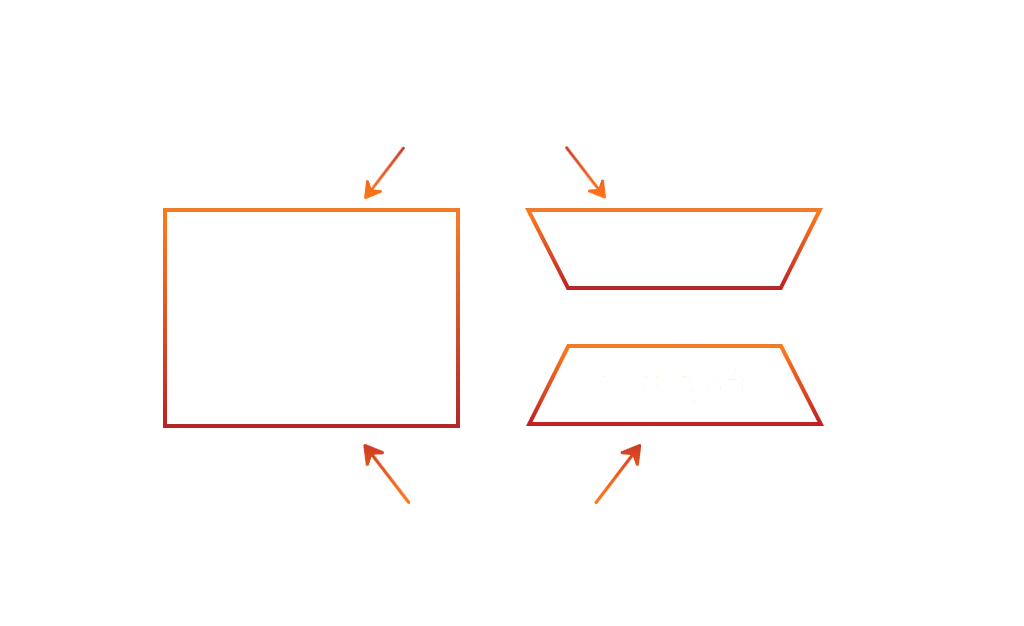
LoRA freezes the pre-trained model’s weights and injects small, trainable rank-decomposition matrices into each transformer layer. Instead of updating billions of parameters, you train a much smaller set of “adapter” weights — reducing trainable parameters by up to 10,000x on models like GPT-3 (175B parameters), while preserving most of full fine-tuning’s performance gains. LoRA blocks typically sit in the attention layers, with a rank value (“r”) as low as 2–4 producing strong results in many tasks. Libraries like Hugging Face’s PEFT make implementation straightforward: load a base model, wrap it with a LoraConfig, and fine-tune only the adapter weights.
Source: https://arxiv.org
Fig: The architecture of Low-Rank Adaptation (LoRA)
Quantized LoRA (QLoRA):
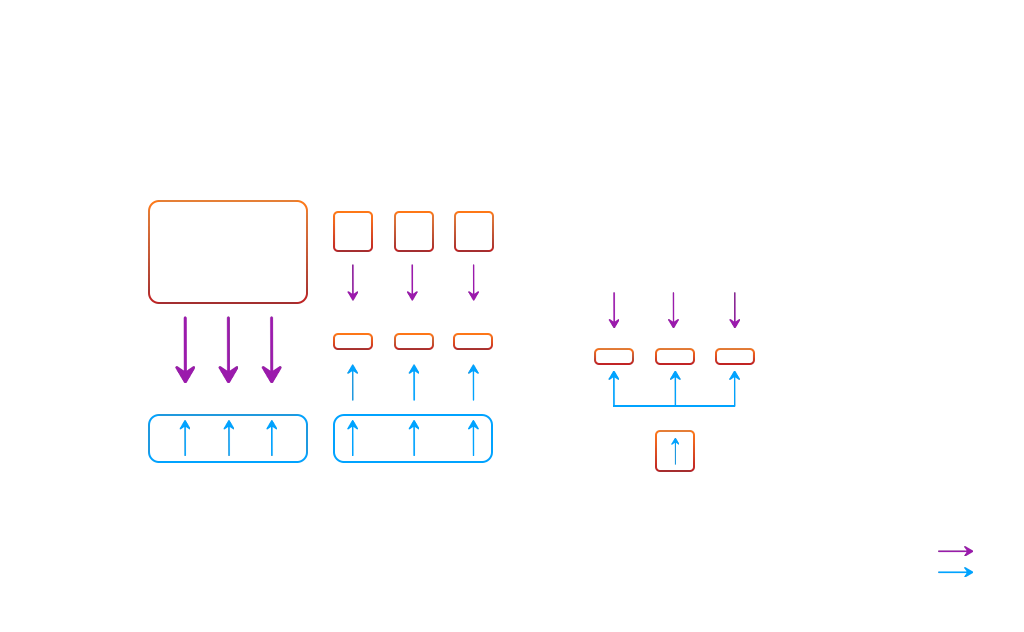
QLoRA extends LoRA by backpropagating gradients through a frozen, 4-bit quantized version of the pre-trained model into the LoRA adapters. Quantization converts high-precision numbers into lower-precision formats, cutting memory usage dramatically. Paired with paged optimizers to handle memory spikes, QLoRA lets teams fine-tune large models like LLaMA on a fraction of the hardware full fine-tuning would need, with minimal performance loss.
Source: https://arxiv.org
Fig: The variations between QLoRA and its predecessor, LoRA
The diagram illustrates the variations between QLoRA and its predecessor, LoRA. QLoRA implements 4-bit precision quantization for the transformer model. It utilizes paged optimizers on the CPU to handle unexpected data spikes.
This practical approach enables efficient fine-tuning of LLMs like LLaMA. This reduces memory demands while maintaining performance.
Besides LoRA and QLoRA, PEFT includes other methods:
Other PEFT Methods
- Prefix Tuning — freezes the model and optimizes a small, continuous task-specific vector prepended to inputs.
- Prompt Tuning — optimizes the input prompt itself rather than the model weights.
Managed platforms from Google, AWS, and Azure now abstract much of this: select a base model, upload domain data, and fine-tune with a fraction of the code PEFT required a couple of years ago. PEFT is also what makes synthetic data genuinely useful — smaller, well-curated datasets go further when you’re only training a small set of adapter weights.
Tools like Generative AI Studio by Google simplify the fine-tuning of LLMs. Select the base model, upload data in JSON format, and fine-tune the model. This way, users can save time and effort.

Revitalize your products with GenAI for a distinctive market presence.
Synthetic Data for LLM Training
One of the biggest practical shifts in LLM customization is the rise of synthetic data — text or examples generated by an LLM (often a stronger “teacher” model) to train or fine-tune another model. Why it matters for enterprises:
- Filling data gaps: many domains lack enough labeled examples for effective fine-tuning; synthetic data bridges that gap.
- Privacy and compliance: synthetic datasets modeled on real patterns, without real customer records, reduce exposure in regulated sectors.
- Balanced coverage: real-world data skews toward common cases; synthetic generation lets teams deliberately create edge cases.
- Speed: generating thousands of task-specific examples is far faster than manual collection and labeling.
The caveat: synthetic data needs quality controls. Without careful filtering and validation, models fine-tuned on it can inherit and amplify the generating model’s own errors and biases — worth testing for explicitly during evaluation.
LLM Evaluation and Hallucination Reduction
A model that’s been fine-tuned but never rigorously evaluated is a liability, not an asset. Evaluation needs to happen continuously, not just once before launch. What to evaluate:
- Accuracy and relevance against task-specific benchmarks or held-out test sets.
- Hallucination rate — how often the model generates confident but false or unsupported statements.
- Consistency — stable answers to semantically similar prompts.
- Safety and bias — output staying within guardrails across different user groups.
To reduce hallucinations in practice: ground responses in retrieved, verifiable sources (RAG) rather than parametric memory alone; use structured evaluation frameworks — LLM-as-a-judge, human-in-the-loop review, reference-based scoring — instead of spot-checking; fine-tune on “I don’t know” or abstention examples so the model learns when not to answer confidently; and track hallucination rate as an ongoing production metric, not a one-time launch gate.
This intersects directly with pipeline design — see Building Smarter AI Pipelines with LangChain, RAG, and Hierarchical LLMs for a deeper look.
LLMOps and Continuous Model Monitoring
Fine-tuning a model is a milestone, not a finish line. Once in production, it needs the same operational discipline as any other business-critical system — the domain of LLMOps. Key components of a mature practice:
- Version control for models, prompts, and fine-tuning datasets, so every production behavior traces back to a specific configuration.
- Continuous monitoring for data drift and performance drift.
- Cost and latency tracking, since inference costs scale with usage in ways training costs don’t.
- Automated retraining triggers when monitored metrics fall outside acceptable thresholds.
- Rollback and canary deployment so updates can be tested safely before full rollout.
Without LLMOps, fine-tuned models degrade quietly in production. For a deeper look, see LLMOps: Strategic AI Lifecycle Management for Businesses.
Training LLMs for AI Agents and Autonomous Workflows
Perhaps the biggest change in 2026 is that the model is rarely the whole system anymore. Increasingly, LLMs sit inside AI agents — systems that reason, call tools, retrieve information, and take multi-step actions toward a goal. This changes what “training” needs to optimize for:
- Tool-use fine-tuning — teaching a model when and how to call external tools or APIs, not just generate text.
- Reasoning trace quality — optimizing how well the model plans and sequences steps, not just single-response quality.
- Context management — agentic systems live and die by what’s in the context window at each step; poor management causes drift and hallucination even in a well fine-tuned model.
This is the discipline behind context engineering — treating what you feed the model at each step as a design problem, covered in How Context Engineering Powers Agentic LLM Systems. Agentic systems also need ongoing governance as they act autonomously across workflows — see Introducing ADLC: The Missing Lifecycle for Scaling Agentic AI in Organizations.
Enterprise Best Practices: Security, Governance, and Compliance
Customizing an LLM for enterprise use means the model now touches your data, customers, and regulatory obligations. A few non-negotiables:
- Data governance: know exactly what data went into fine-tuning or RAG retrieval — its provenance, licensing, and any PII it contains.
- Access control: fine-tuned models and knowledge bases should follow least-privilege principles like any other enterprise system.
- Auditability: in regulated industries, you need to explain why a model produced a given output — favoring RAG’s traceability alongside structured evaluation logs.
- Human-in-the-loop checkpoints: keep a human review step for high-stakes decisions, particularly early in production.
- Model and vendor risk management: track dependencies on foundation models and contingency plans for provider changes.
These practices are what let enterprises scale LLM applications beyond a single pilot. See Building Enterprise AI Applications with Generative AI: From Prompt to Production for the broader view.
The fundamentals of LLM training — pre-training, fine-tuning, tokenization, PEFT — haven’t gone away; they’re still the foundation every enterprise AI initiative rest on. But the center of gravity has shifted. In 2026, success depends less on how to train a model and more on whether you fine-tune, retrieve, or both; whether you know the model is actually accurate and staying that way; who’s watching it in production; whether it can act safely as part of an autonomous agent; and whether you can govern it the way your compliance and security teams require.
This blog is meant to be a living reference point for those questions — bookmark it and follow the links throughout to go deeper on strategy, pipelines, context engineering, LLMOps, agentic AI, and enterprise deployment.
Write to us with your thoughts on training and customizing LLMs for your business. Also visit Nitor Infotech to see what we’re exploring in the AI technology realm.
Frequently Asked Questions
1. Do enterprises need to train an LLM from scratch to use one for their business?
No. Training a foundation model from scratch requires tens of millions of dollars in compute, trillions of tokens of data, and specialized systems expertise….Read more
2. What’s the difference between LoRA and QLoRA?
LoRA freezes a pre-trained model’s weights and trains small, injected rank-decomposition matrices instead of the full model, cutting trainable parameters dramatically….Read more