
What is ETL testing and how can it be performed?
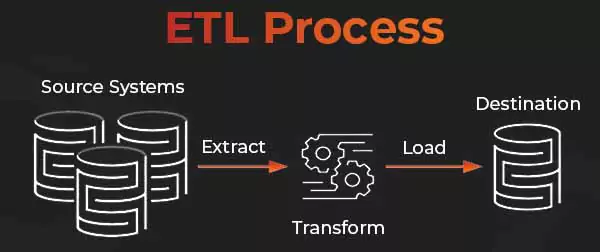
ETL in testing helps organization migrate their historical data from various sources to a centralized platform. ETL (extract, transform, load) helps in eliminating manual errors and inaccurate information, thereby easing the process of data transformation and data loading. It is used to bring data from multiple different sources to a centralized database, typically a data warehouse.
Here’s an image that shows the process of ETL testing-
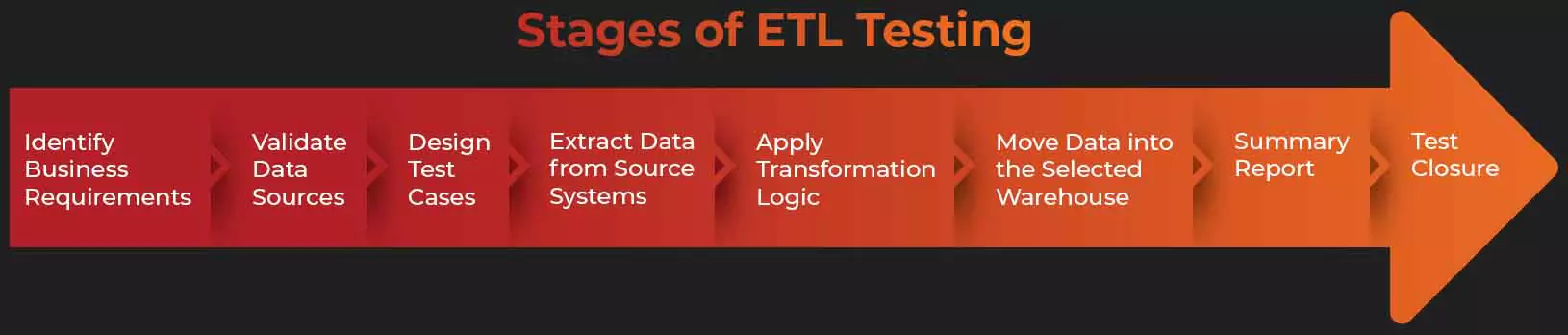
Stages of ETL testing include-
Read our blog to discover the prerequisites for performing ETL testing.
Could anyone tell me if ETL testing is good or not?
ETL testing is a good option. It is a process of loading data from the source system to the target system. Here are the reasons why businesses are opting for ETL testing-
- Data completeness
- Data integrity
- Data correctness
- Data reconciliation
- Data transformation
What is ETL, Extract, Transform, Load?
ETL can be defined as a process that extracts, transforms, and loads data from multiple sources to a data warehouse or other unified data repository. It is used by organizations to carry out the following tasks-
- Extract data from legacy systems
- Cleanse the data to improve data quality and manifest its consistency
- Load data into target database
Read our blog to understand the phases for performing ETL testing.
How is ETL testing different in cloud-native environments compared to traditional data warehouses?
Traditional ETL testing focused on validating row counts and transformations between two relational systems. Cloud-native testing must additionally account for streaming and near-real-time pipelines, Medallion architecture layers (Bronze/Silver/Gold), schema drift as source systems evolve, and scale that can jump from thousands to billions of records — often on platforms like Snowflake, Databricks, or BigQuery.
What is CDC (Change Data Capture) testing, and why does it matter?
CDC testing validates that a pipeline correctly captures and applies only new or changed records — inserts, updates, and deletes — rather than reprocessing full datasets. It matters because a missed or duplicated CDC event can silently create duplicate or missing records downstream, and pipelines must also be tested for idempotency so re-running them doesn't corrupt data.
What tools are commonly used for modern ETL testing?
Popular options include Great Expectations (open-source data quality assertions), dbt Tests (built-in checks for uniqueness, nulls, and referential integrity within dbt models), Soda (YAML-based data quality and anomaly detection), QuerySurge (large-scale, query-based data validation), and Informatica Data Quality (enterprise-grade profiling and governance).